Comparing the entries of the matrices on both sides yields and .
Define and .
Problem 3. Show that .
(Click for Solution)
Solution. We observe that . By Problem 1,
Similarly, . Therefore, .
Define .
Problem 4. Evaluate . Hence, if , construct a matrix with the property that
(Click for Solution)
Solution. Using the multiplication in Problem 3 but setting and ,
If , then either or , so that . Therefore,
Denoting , define , so that
By Problem 3, .
Problem 5. Determine the two possible matrices such that
(Click for Solution)
Solution. Write . Using the multiplication in Problem 3 with and ,
Therefore,
Grouping the terms together,
Using Problem 2,
Using the second equation, either or . If , then substituting into the first equation,
However, this equation has discriminant, and so there are no real roots to the equation, a contradiction.
Therefore, we must have . Substituting into the first equation again,
Therefore, . Hence, the two possible matrices for are
We can condense them to the expression .
Remark 1. By denoting and , we have created a model for the complex numbers, where by Problem 1. In particular, numbers of the form are called purely imaginary. The solution to Problem 5 would then look like
The letter ‘z‘ is used to denote a complex number by convention. Furthermore, the calculation motivates the (somewhat debatable) notation . For more information, see this post.
In this post, we will explore some basic notions in quantitative finance.
More specifically, buying and selling stocks.
Suppose 1 unit of a stock KMATH costs $1 at time t = 0. Assume negligible trading fees.
Problem 1. At time t = 0, you buy 200 units of KMATH. What is the value of your position?
(Click for Solution)
Solution. The value of units of KMATH is
Problem 2. Suppose at time t = 1, the price per unit of KMATH increased by 10%. What is the value of your position at t = 1?
(Click for Solution)
Solution. The value of the position has increased by , that is,
Therefore, the position has a new value of
Alternate Solution. If the initial position has a value of and the price increased by a percentage of , then the position increases by the value
Therefore, the position would have a new value of
In particular, setting and
in Problem 2 yields a new value of
Problem 3. Suppose at time t = 2, the price per unit of KMATH decreased by 10%. What is the overall change in your position from t = 0 to t = 2? How about its overall percentage change? Is your position in a profit or a loss?
(Click for Solution)
Solution. We will use the calculation in Remark 1. Let
denote the percentage decrease of the price per unit of KMATH from to .
By Remark 1, the new position at is . Therefore, the new position at has a value of
Substituting , the new position has a value of
The overall percentage change is
Since the percentage change is negative, our position currently sits in a loss.
Problem 4. For any positive integer n, let rn denote the percentage change in your position from t = n – 1 to t = n. Show that the overall percentage change between t = 0 and t = n is calculated by
1 + r = (1 + r1) × (1 + r2) × … × (1 + rn).
(Click for Solution)
Solution. Let denote the value of the position at time . Applying the alternate solution in Problem 2 repeatedly,
On the other hand, denoting the overall percentage change by , we have
Equating the two sides,
Dividing by on both sides yields the desired result:
Problem 5. What is the minimum percentage increase of the price per unit of KMATH from t = 2 to t = 3 required for you to not incur loss?
(Click for Solution)
Solution. Let denote the required percentage increase of the price per unit of KMATH from to . By Problem 3, the overall percentage change is given by
Substituting and , since and , we can divide on both sides to obtain
Subtracting by on both sides,
Since we do not want to incur loss, the overall percentage change must be non-negative, that is to say, :
In particular, we need more than increase in order to compensate for an overall decrease of .
Problem 1. Illustrate the two vectors in the diagram below.
Show that the angle between is given by
(Click for Solution)
Solution. Observe that
Using the law of cosines,
Expanding the display on the left-hand side by Pythagoras’ theorem,
Comparing both sides of the expression ,
as required.
Remark 1. The left-hand side is called the dot product of two vectors, defined by
Then the result of Question 1 reduces to the dot product equation
Let denote a real constant and denote another two-dimensional vector.
Problem 2. Using Remark 1, show that the following equations always hold:
.
.
.
.
.
(Click for Solution)
Solution. Write and . The first result is almost immediate since are real numbers:
For the second result
Furthermore,
Hence, . Similarly, . Hence .
The third property is straightforward:
Recall that . Then
Define . Then the fifth property is immediate:
Problem 3. Explain why . Deduce the following:
.
.
.
.
.
(Click for Solution)
Solution. Using Remark 1 and Pythagoras’ theorem,
Therefore, we obtain the properties rather straightforwardly:
with equality if and only if . Next,
The fourth property, known as the Cauchy-Schwarz inequality, follows from Problem 1 and the observation that :
The fifth property follows from the fourth:
and taking square roots on both sides.
Problem 4. Define . Show that the following hold:
.
.
.
.
(Click for Solution)
Solution. The results in Problem 4 comes from Problem 3:
then
Furthermore,
and
Remark 2. In the language of linear algebra, Remark 1 and Problem 2 defines a “multiplication” on the set of two-dimensional vectors, turning it into a realinner product space. Problem 3 show that inner product spaces are normed spaces (in that two-dimensional vectors have lengths or norms), while Problem 4 shows that normed spaces are metric spaces (i.e. the notion of distance is a reasonable one).
Problem 5. Given that the point lies on the line , show that any other point lies on the line if and only if
(Click for Solution)
Solution. Since lies on the line, we have
The point lies on the line if and only if
Subtracting the equations yields the equation
On the other hand,
Then lies on the line if and only if the right-hand side equals , that is,
Remark 3.Problem 5 generalises to an -dimensional hyperplane: Given that the point lies on the -dimensional hyperplane with equation
any other point lies on the hyperplane if and only if
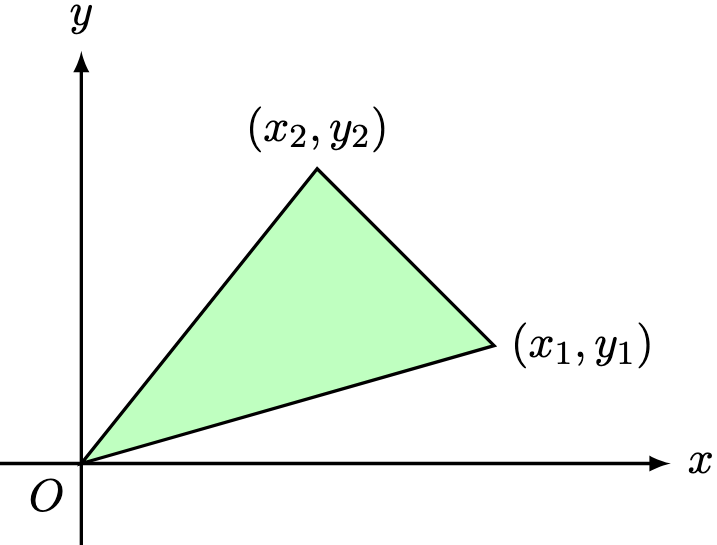
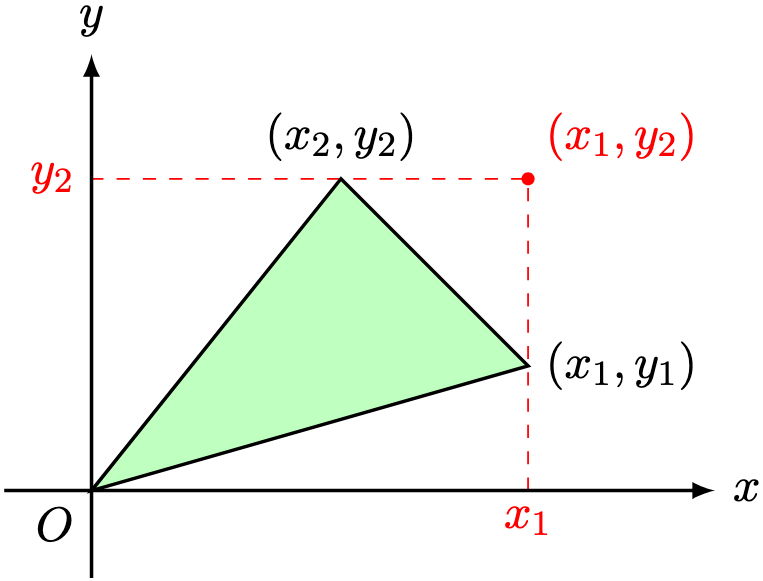
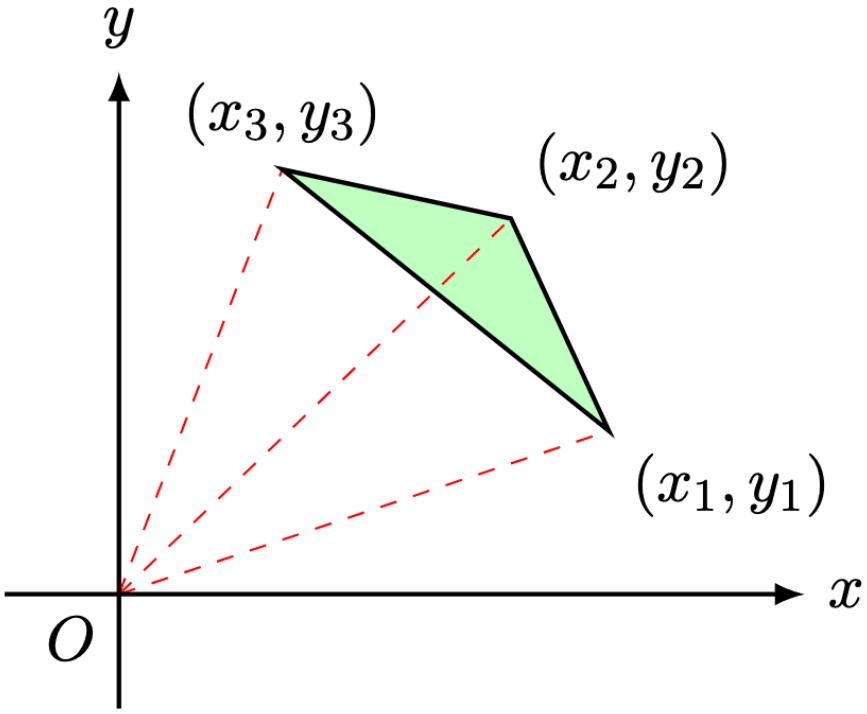
Solution. Add dashed lines to draw in “phantom” triangles.
We subtract the area of the three smaller triangles from the larger rectangle:
Remark 1. There are many other kinds of triangles, but with enough patience, they can all be shown to yield the same area formula.
Definition 1. Define
In particular, the area of the triangle in Problem 1 can be written as .
Problem 2. Show that . In particular,
(Click for Solution)
Solution. By definition,
Remark 1. In particular, a polygon is said to have positive orientation if its coordinates are traversed in anti-clockwise direction, and have negative orientation if its coordinates are traversed in clock-wise direction.
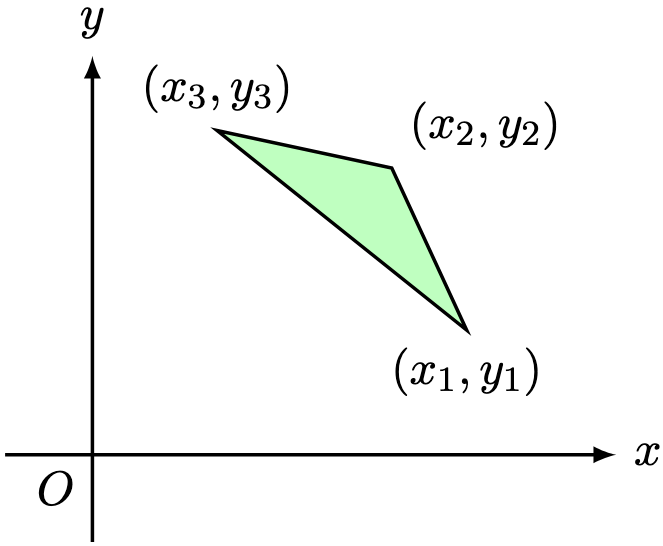
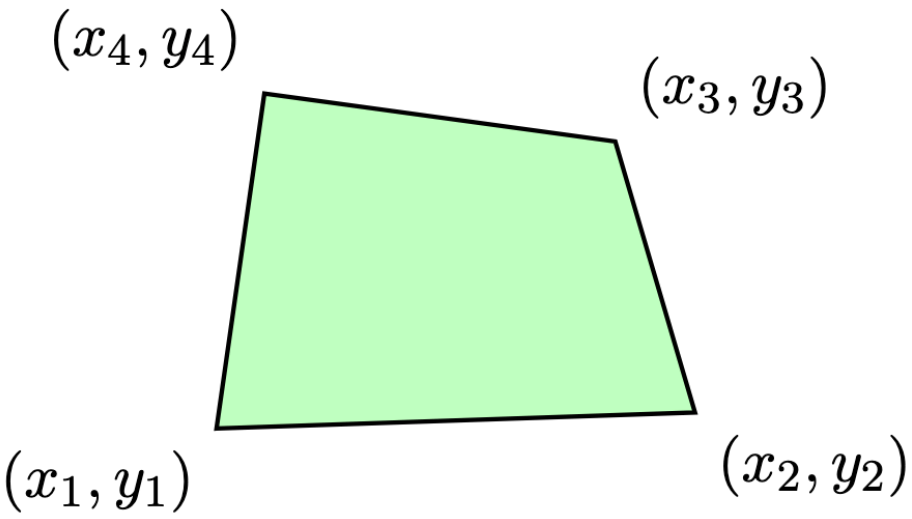
Problem 3. Consider the triangle below with positive orientation.
Show that the triangle has area
(Click for Solution)
Solution. Draw some “phantom” triangles:
Denote the area of the triangle by . By Problem 1,
By Problem 2,
Remark 2. In a similar manner, for triangles with other orientations, as long as the vertices are traversed in an anti-clockwise direction, we still recover the same formula as in Problem 3.
Definition 2. Make the notation
This notation is commonly referred to as the shoelace formula. In particular, the area in Problem 3 can be expressed as
Problem 4. Show that
(Click for Solution)
Solution. Patiently expand the right-hand side:
Problem 5. Consider the quadrilateral below.
Show that the quadrilateral has area
(Click for Solution)
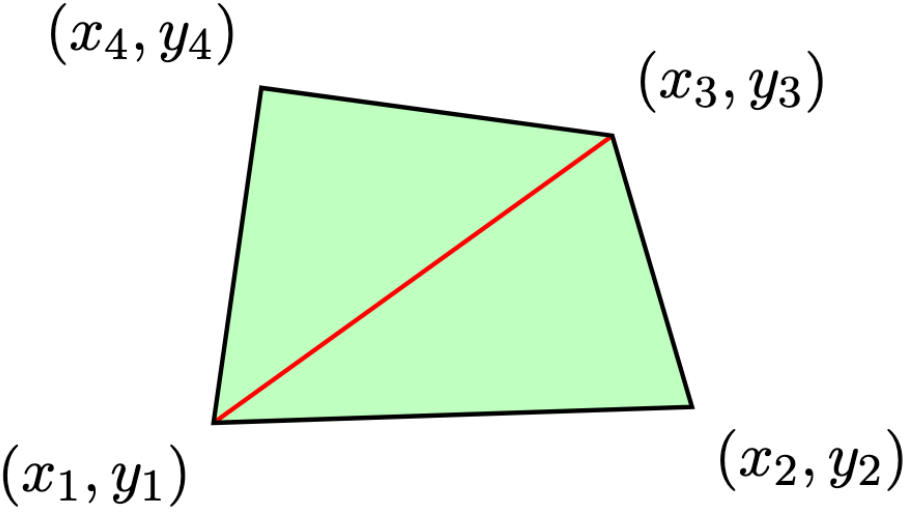
Solution. Connect to .
The quadrilateral consists of two triangles, and therefore its area is given by the sum of both triangles, whose formulas are given by Problem 4:
where the comes from Problem 2. Multiplying both sides by yields the formula
Remark 2. Using mathematical induction and the same strategy in Problem 5, the signed area of an -gon with vertices
can be shown to equal
Furthermore, this quantity is positive if the vertices are traversed in an anti-clockwise direction and negative if the vertices are traversed in a clockwise direction.
Definition 1. A quadrilateral is a four-sided shape.
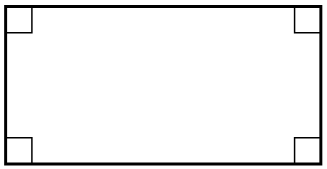
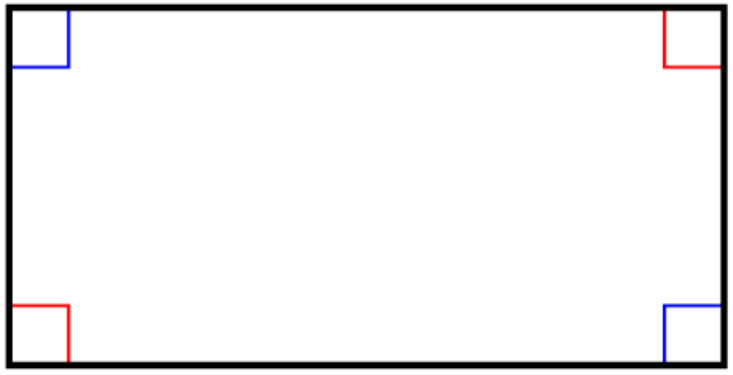
For example, a rectangle is a quadrilateral whose internal angles are all .
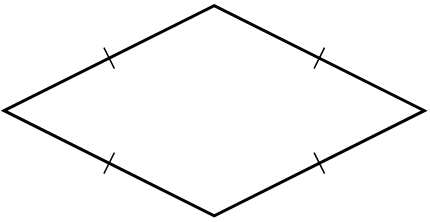
Definition 2. A rhombus is a quadrilateral with equal side lengths.
Problem 1. Show that a quadrilateral is a square if and only if it is both a rectangle and a rhombus.
(Click for Solution)
Solution. Suppose a quadrilateral is both a rectangle and a rhombus.
As a rectangle, all of its angles are .
As a rhombus, all of its side lengths are equal.
Therefore, it must be a square.
Trivial.
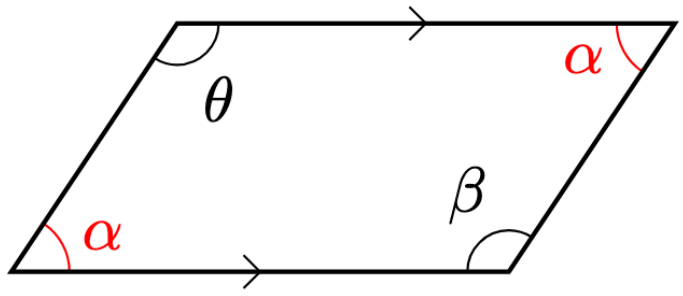
Definition 3. A parallelogram is a quadrilateral with two pairs of parallel lines.
Problem 2. Show that the following are equivalent for a given quadrilateral :
is a parallelogram,
opposite sides in are equal,
opposite angles in are equal.
(Click for Solution)
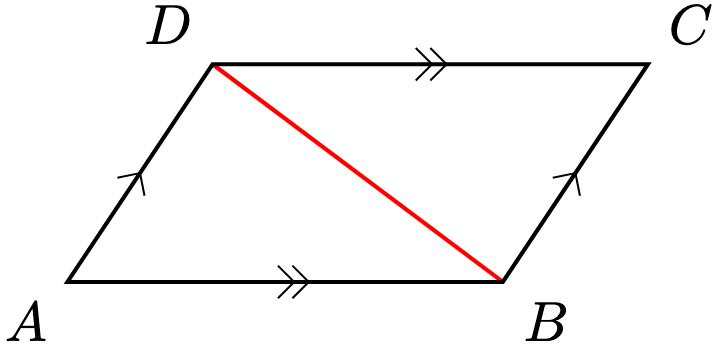
Solution. Consider the parallelogram .
Draw the diagonal . Since , by alternate angles,
As a common side, . Since , by alternate angles,
By the ASA Criterion, . In particular, and , so that its opposite sides are equal.
Draw the diagonal and use the SSS Criterion to conclude that opposite angles equal each other.
Let denote the angles of the quadrilateral.
Since angles in a quadrilateral sum to ,
Since this equality holds for any pair of interior angles, the parallelogram must have two pairs of parallel sides.
Problem 3. Show that a rectangle is always a parallelogram. Furthermore, show that a parallelogram is a rectangle if and only if it has at least one interior right angle.
(Click for Solution)
Solution. Since all angles in a rectangle is , opposite pairs of angles are equal.
By Problem 2, a rectangle is a parallelogram.
Let denote the interior angles of the parallelogram, labelled anti-clockwise.
By Problem 2, and . Since angles in a quadrilateral sum to ,
Therefore, all angles equal , and the parallelogram is a rectangle.
Trivial.
Problem 4. Show that a rhombus is always a parallelogram. Furthermore, show that a parallelogram is a rhombus if and only if it has at least one pair of equal adjacent sides.
(Click for Solution)
Solution. Since opposite sides in a rhombus are equal, by Problem 2, a rhombus is a parallelogram.
Let denote the sides of a parallelogram, labelled anti-clockwise.
By Problem 2, and . By hypothesis, suppose without loss of generality. Then . Therefore, all side lengths are equal, and the parallelogram is a rhombus.
Trivial.
Problem 5. Show that a rectangle is a square if and only if it has at least one pair of equal adjacent sides. Likewise, show that a rhombus is a square if and only if it has at least one interior right angle.
(Click for Solution)
Solution. We first prove the rectangle claim:
By Problem 3, a rectangle is a parallelogram. By hypothesis and Problem 4, it is a rhombus. By Problem 1, it is a square.
Trivial.
The rhombus claim follows similarly:
By Problem 4, a rhombus is a parallelogram. By hypothesis and Problem 2, it is a rectangle. By Problem 1, it is a square.
Trivial.
Definition 4. A trapezium is a quadrilateral with at least one pair of opposite sides that are parallel.
Problem 6. Show that a parallelogram is always a trapezium. Furthermore, show that a trapezium is a parallelogram if and only if it has at least one pair of equal opposite angles.
(Click for Solution)
Solution. Since a parallelogram has two pairs of equal and parallel sides, it has at least one pair of parallel sides, and is thus a trapezium.
Denote the angles of the trapezium by .
Given the pair of parallel sides, interior angles are supplementary, so that
By Problem 2, the trapezium is a parallelogram.
Trivial.
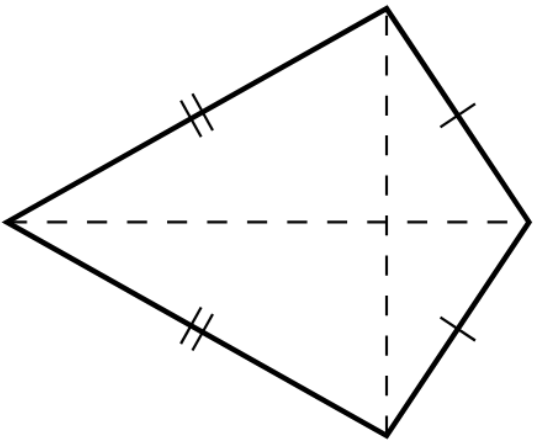
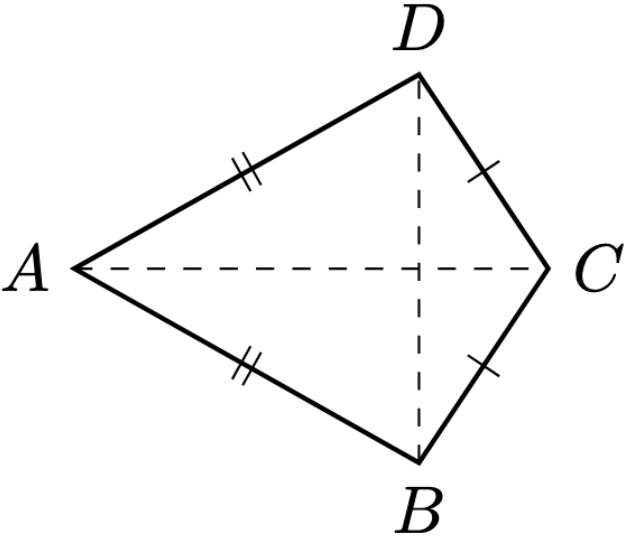
Definition 5. A kite is a quadrilateral with two pairs of adjacent sides that are equal in length.
Problem 7. Show that a kite has at least one pair of equal opposite angles and that its diagonals are perpendicular to each other.
(Click for Solution)
Solution. Consider the kite below.
As base angles of isosceles triangles,
Hence,
as required. Using the SAS Criterion, . In particular, . As a kite, . As base angles of an isosceles triangle,
Using the ASA Criterion, , so that . Since adjacent angles on a straight line are supplementary, . Solving, .
Problem 8. Show that a quadrilateral is a rhombus if and only if it is both a kite and a trapezium.
(Click for Solution)
Solution. Suppose the quadrilateral is both a kite and a trapezium. By Problem 7, it has at least one pair of equal opposite angles. By Problem 6, it is a parallelogram. As a kite, it has at least one pair of equal adjacent sides. By Problem 4, it is a rhombus.
Remark 1. In both problems, we used the method of differences or a telescoping sum (or more fancifully, the fundamental theorem of discrete calculus), which states that if , then


 and
and  as follows:
 .
.
 be real numbers.
 and
and  .
.
 and
and  and
and  .
. .
. . By Problem 1,
 . Therefore,
  .
. . Hence, if
  , construct a matrix
  with the property that
 and
and  ,
,
 or
or  , so that
  . Therefore,
 , define
  , so that
 .
. such that
 ,
,


 or
or  . If
. If 
 , and so there are no real roots to the equation, a contradiction.
 . Hence, the two possible matrices for
  are
are
 .
. and
and  , we have created a model for the complex numbers
  , where
  by Problem 1. In particular, numbers of the form
  are called purely imaginary. The solution to Problem 5 would then look like
 . For more information, see
  units of KMATH is
 , that is,

 and the price increased by a percentage of
  , then the position increases by the value

 and
and


 to
to  .
. . Therefore, the new position at
 , the new position has a value of

 between t = 0 and t = n is calculated by
 denote the value of the position at time
  . Applying the alternate solution in Problem 2 repeatedly,


 on both sides yields the desired result:
 denote the required percentage increase of the price per unit of KMATH from
  . By Problem 3, the overall percentage change
 and
and  , since
  and
and  , we can divide on both sides to obtain
 on both sides,
 :
:
 increase in order to compensate for an overall decrease of
  such that
  , where
 ,
, ,
,
 . Using the extended definitions of
  , for
, for 
 or
or
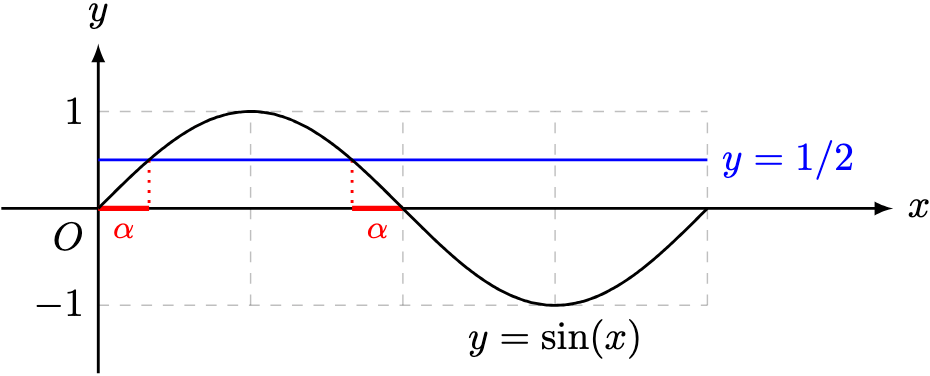
 -periodic:
 , we have

 and
and  ,
,
 or
or  , where
  , where
 , for
, for 
 or
or
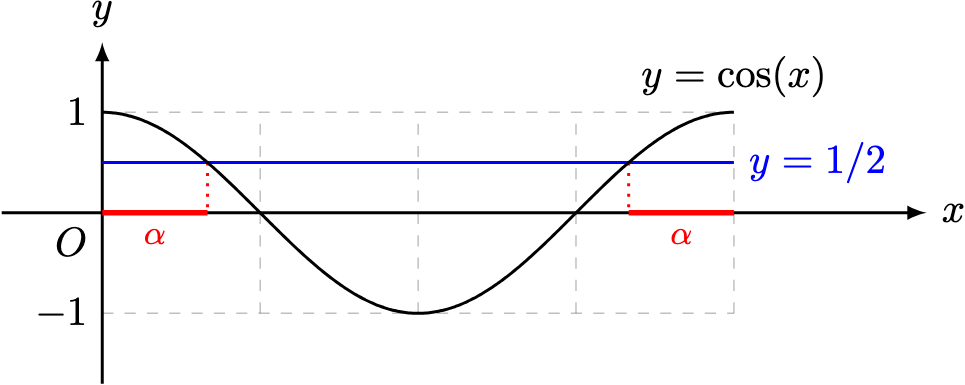
 , where
 , for
, for 
 or
or
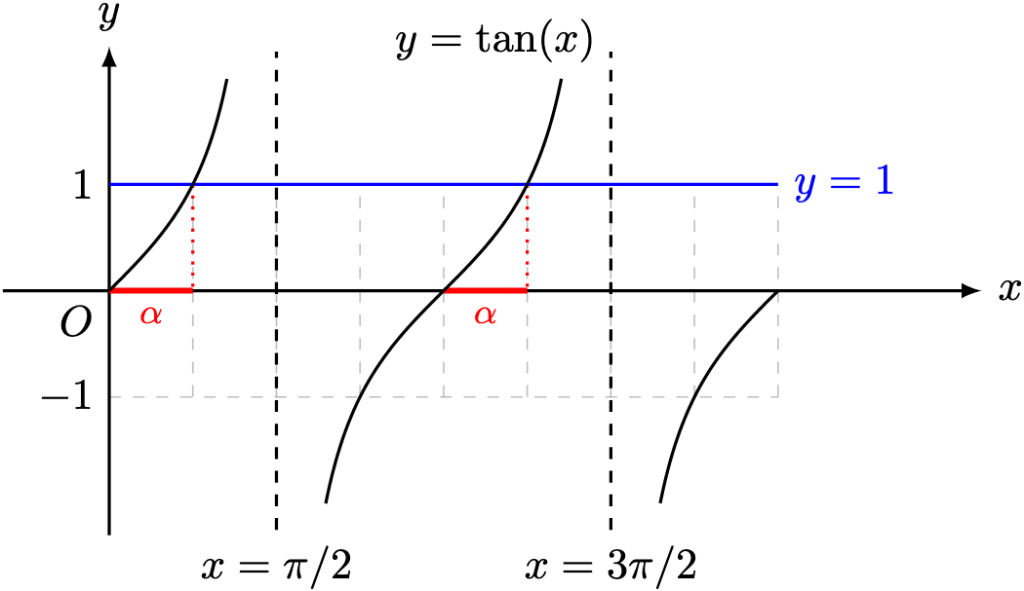
 , solve the equation
  , where
  .
. . Using special angles, we recall that for
  ,
,

 or
or 
 . Using special angles, we recall that for

 .
. . Using the same equations as the case for
  , or
, or .
. .
. , where
  is an integer.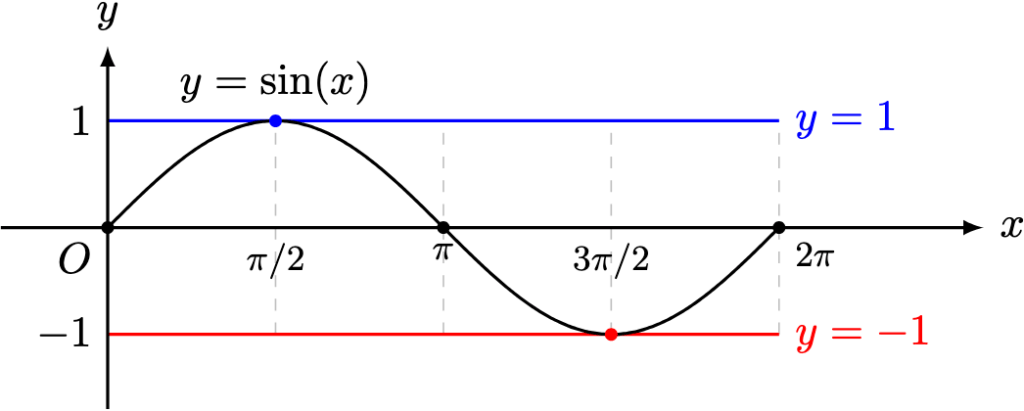
 , where
 ,
, ,
, .
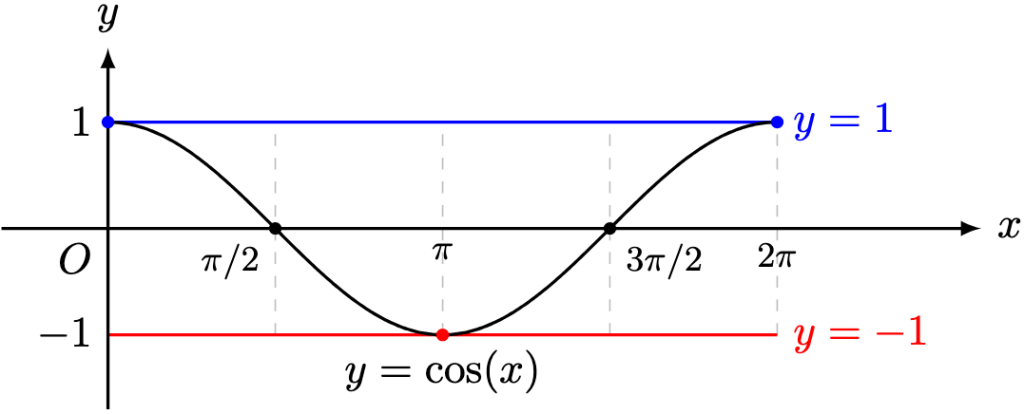
.
 . Define
  such that

 , then only the first two equations work:
  .
. :
:  , then only the last two equations work:
  .
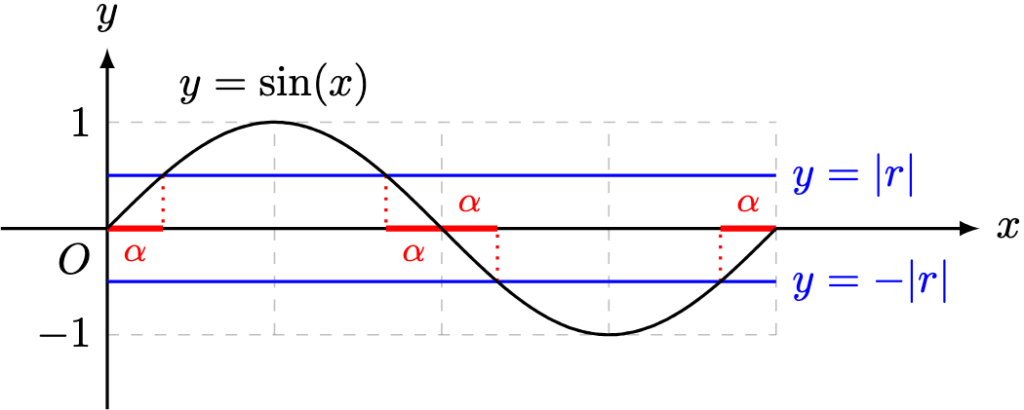
.


 .
. by Problem 5.
 .
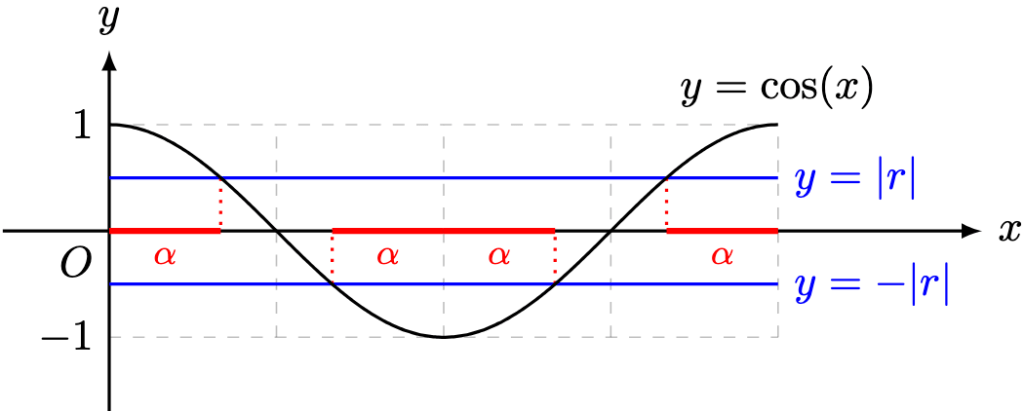
.

 in terms of
 .
. .
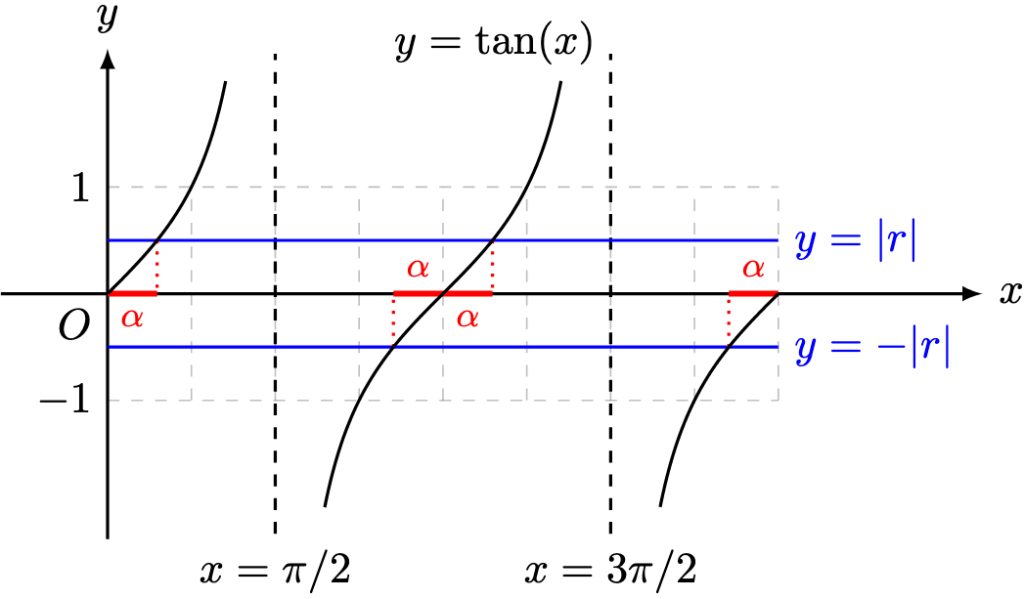
.
 , the solutions for
  , and
, and , the candidate solutions in the domain


 , the candidate solutions in the domain

 , the candidate solutions in the domain

 for
for  so that
  . To solve the equation
 ,
,

 to obtain all solutions in
 for
for  .
.
 :
:
 or
or  . In the former,
 , this equation has no solutions. Therefore,
 in the diagram below.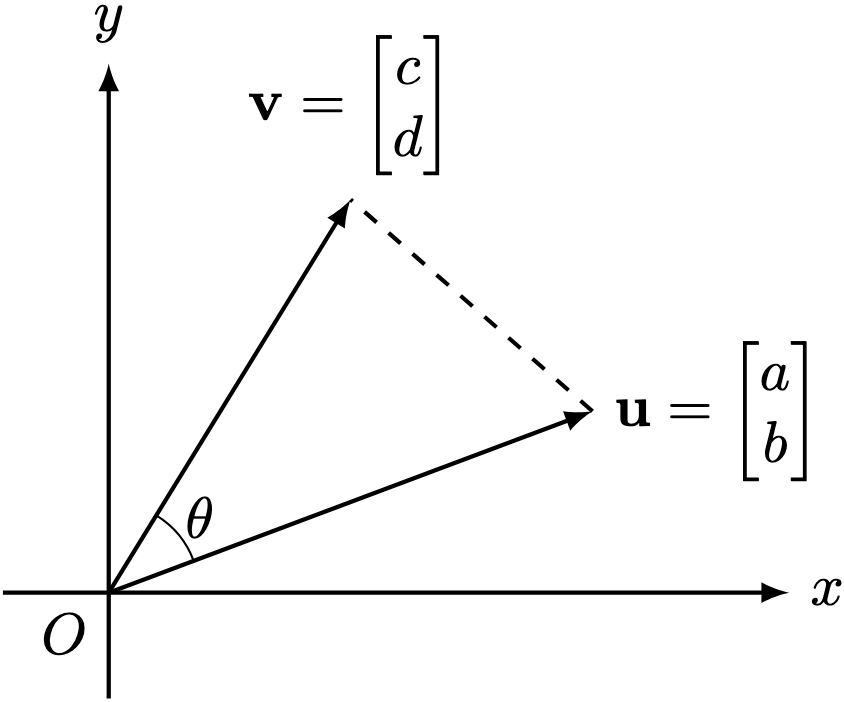
 between
  is given by


 ,
,


 denote another two-dimensional vector.
 .
. .
. .
. .
. .
. and
and  . The first result is almost immediate since
  are real numbers:


 . Similarly,
  . Hence
  .
.
 . Then
 . Then the fifth property is immediate:
 . Deduce the following:
 .
. .
. .
. .
. .
.

 . Next,
 :
:

 . Show that the following hold:
 .
. .
. .
. .
.


 lies on the line
  , show that any other point
  lies on the line if and only if


 , that is,
 -dimensional hyperplane: Given that the point
  lies on the
 lies on the hyperplane if and only if
 be constants with
 , determine the constants
  in terms of
  such that
 such that the right-hand side has no
  term.
term.

 .
. ,
,

 .
.

 .
. and
and  , so that
![\begin{aligned} z^3 &= m \pm \sqrt{m^2 - p} \\ z^3 &= -\frac D2 \pm \sqrt{\frac{D^2}{4} + \frac{C^3}{27}} \\ z_{\pm} &:= \sqrt[3]{ -\frac D2 \pm \sqrt{\frac{D^2}{4} + \frac{C^3}{27}} }. \end{aligned}](https://s0.wp.com/latex.php?latex=%5Cbegin%7Baligned%7D+z%5E3+%26%3D+m+%5Cpm+%5Csqrt%7Bm%5E2+-+p%7D+%5C%5C+z%5E3+%26%3D+-%5Cfrac+D2+%5Cpm+%5Csqrt%7B%5Cfrac%7BD%5E2%7D%7B4%7D+%2B+%5Cfrac%7BC%5E3%7D%7B27%7D%7D+%5C%5C+z_%7B%5Cpm%7D+%26%3A%3D+%5Csqrt%5B3%5D%7B+-%5Cfrac+D2+%5Cpm+%5Csqrt%7B%5Cfrac%7BD%5E2%7D%7B4%7D+%2B+%5Cfrac%7BC%5E3%7D%7B27%7D%7D+%7D.+%5Cend%7Baligned%7D&bg=ffffff&fg=000&s=0&c=20201002)
 .
. . By comparing the constant term (i.e. set
  ) on both sides of the equation
 . The final solution is then recovered by the substitution in Problem 1:
 .
.


 .
. . In particular,


 . By Problem 1,



 to
to  .
.

 yields the formula
 -gon with vertices

 .
.
 Suppose a quadrilateral is both a rectangle and a rhombus.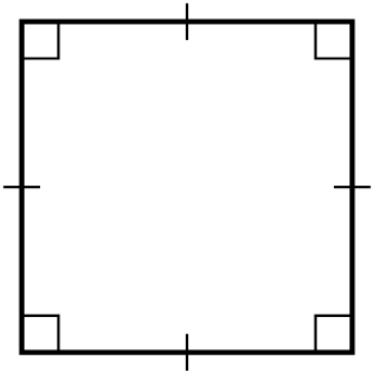
 Trivial.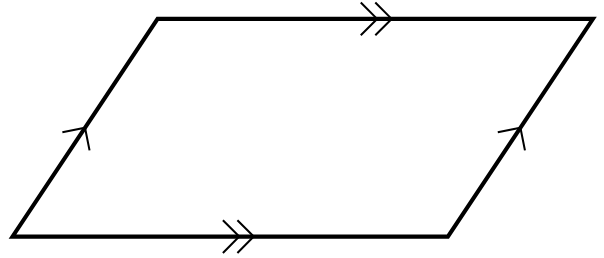
 :
: Consider the parallelogram
  .
.
 . Since
  , by alternate angles,
 . Since
  , by alternate angles,
 . In particular,
  and
and  , so that its opposite sides are equal.
 Draw the diagonal and use the SSS Criterion to conclude that opposite angles equal each other.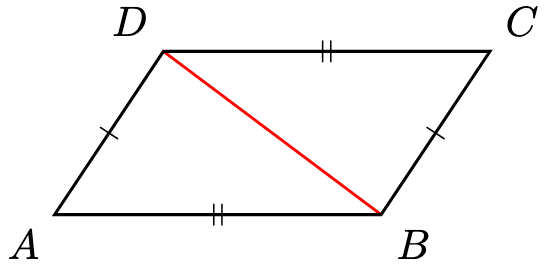
 Let
Let  denote the angles of the quadrilateral.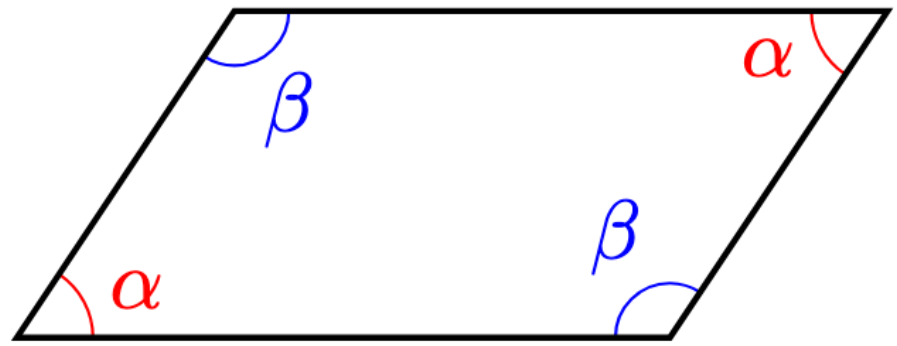
 ,
,
 denote the interior angles of the parallelogram, labelled anti-clockwise.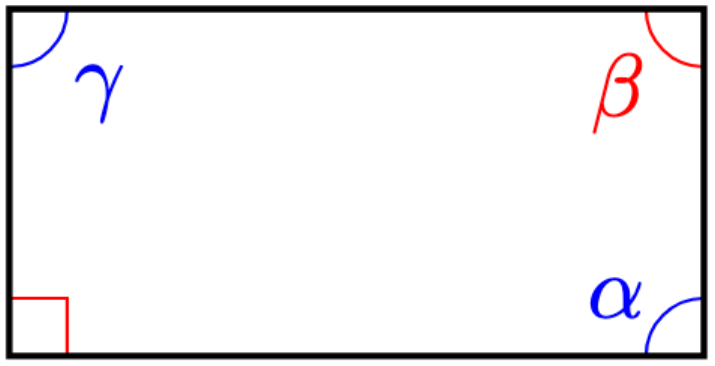
 and
and  . Since angles in a quadrilateral sum to
 denote the sides of a parallelogram, labelled anti-clockwise.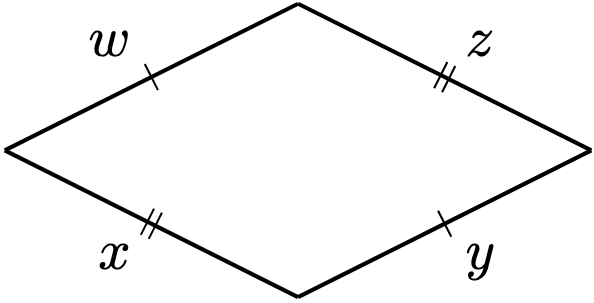
 and
and  . By hypothesis, suppose
  without loss of generality. Then
  . Therefore, all side lengths are equal, and the parallelogram is a rhombus.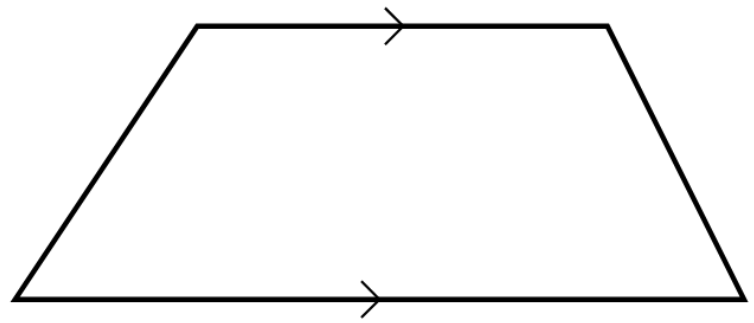
 .
.



 . In particular,
  . As a kite,
  . As base angles of an isosceles triangle,
 , so that
  . Since adjacent angles on a straight line are supplementary,
  . Solving,
  .
.

 with
with  ,
,

 be integers.
 and
and  . Show that the quadratic equation
 .
. . Using the quadratic formula, the solutions are given by

 , evaluate
  in terms of
  . Deduce that
 .
.
 and by Problem 1,
 and
and  . Hence,
 .
. is a positive integer.

 .
.
 , by calculating the discriminant of the quadratic equation,

 :
:
 .
. , show that

 . Dividing by


 , then

