Definition 1. A quadrilateral is a four-sided shape.
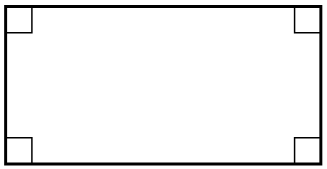
For example, a rectangle is a quadrilateral whose internal angles are all 
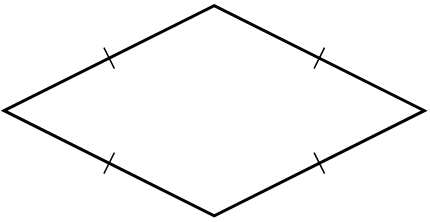
Definition 2. A rhombus is a quadrilateral with equal side lengths.
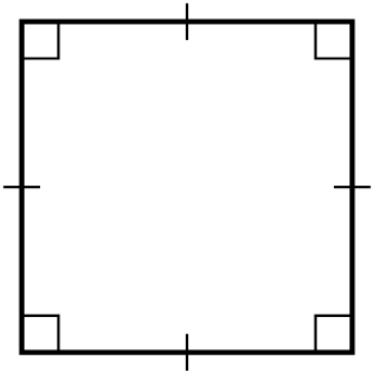
Problem 1. Show that a quadrilateral is a square if and only if it is both a rectangle and a rhombus.
(Click for Solution)
Solution. 
- As a rectangle, all of its angles are
- As a rhombus, all of its side lengths are equal.
Therefore, it must be a square.

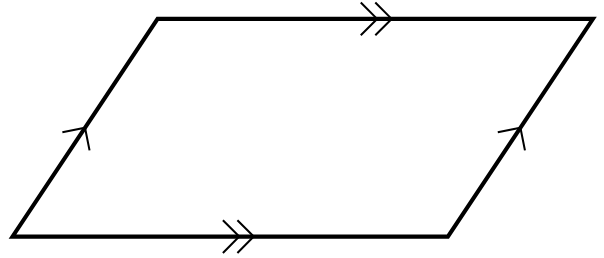
Definition 3. A parallelogram is a quadrilateral with two pairs of parallel lines.
Problem 2. Show that the following are equivalent for a given quadrilateral 
- opposite sides in
- opposite angles in
(Click for Solution)
Solution. 

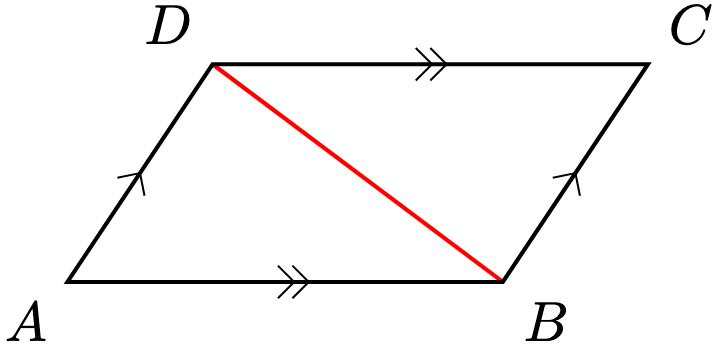
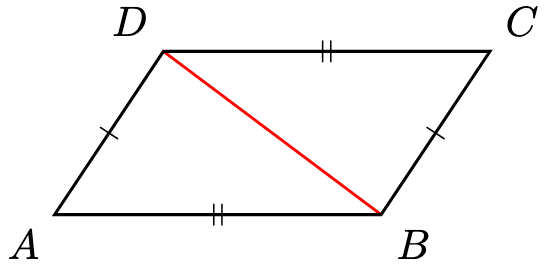
Draw the diagonal 


As a common side, 


By the ASA Criterion, 




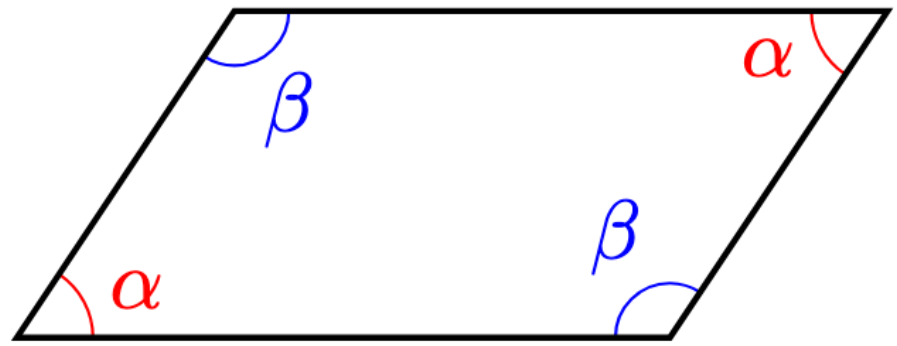
Since angles in a quadrilateral sum to 

Since this equality holds for any pair of interior angles, the parallelogram must have two pairs of parallel sides.
Problem 3. Show that a rectangle is always a parallelogram. Furthermore, show that a parallelogram is a rectangle if and only if it has at least one interior right angle.
(Click for Solution)
Solution. Since all angles in a rectangle is
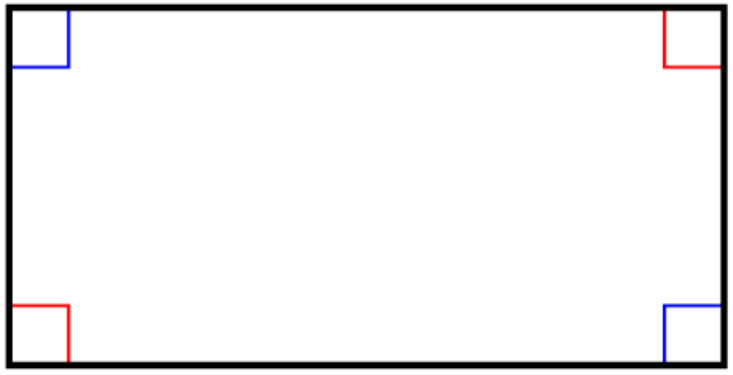
By Problem 2, a rectangle is a parallelogram.

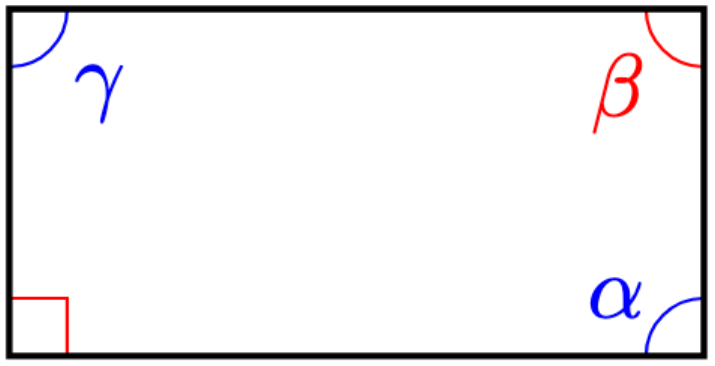
By Problem 2, 


Therefore, all angles equal
Problem 4. Show that a rhombus is always a parallelogram. Furthermore, show that a parallelogram is a rhombus if and only if it has at least one pair of equal adjacent sides.
(Click for Solution)
Solution. Since opposite sides in a rhombus are equal, by Problem 2, a rhombus is a parallelogram.

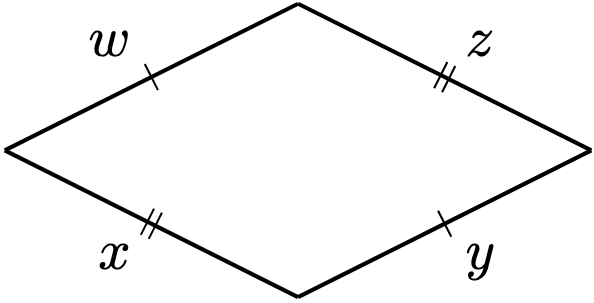
By Problem 2, 


Problem 5. Show that a rectangle is a square if and only if it has at least one pair of equal adjacent sides. Likewise, show that a rhombus is a square if and only if it has at least one interior right angle.
(Click for Solution)
Solution. We first prove the rectangle claim:
The rhombus claim follows similarly:
Definition 4. A trapezium is a quadrilateral with at least one pair of opposite sides that are parallel.
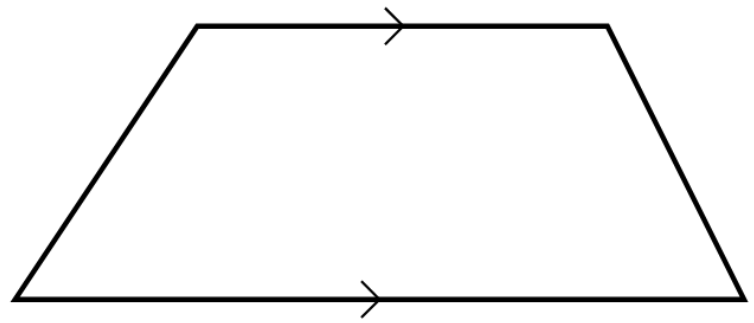
Problem 6. Show that a parallelogram is always a trapezium. Furthermore, show that a trapezium is a parallelogram if and only if it has at least one pair of equal opposite angles.
(Click for Solution)
Solution. Since a parallelogram has two pairs of equal and parallel sides, it has at least one pair of parallel sides, and is thus a trapezium.

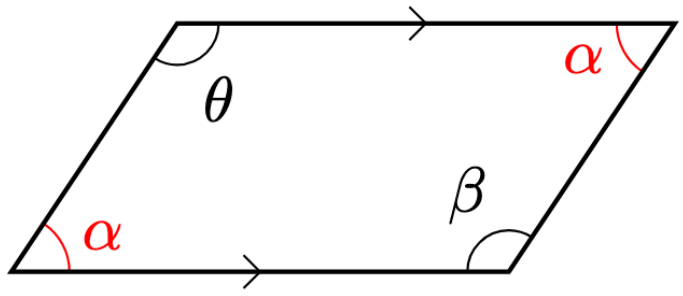
Given the pair of parallel sides, interior angles are supplementary, so that

By Problem 2, the trapezium is a parallelogram.
Definition 5. A kite is a quadrilateral with two pairs of adjacent sides that are equal in length.
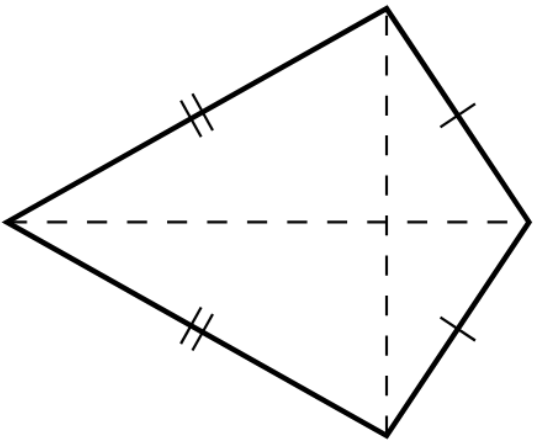
Problem 7. Show that a kite has at least one pair of equal opposite angles and that its diagonals are perpendicular to each other.
(Click for Solution)
Solution. Consider the kite
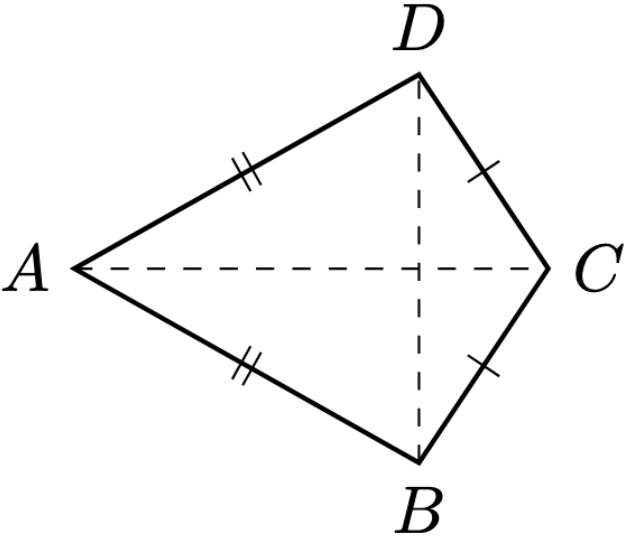
As base angles of isosceles triangles,

Hence,

as required. Using the SAS Criterion, 


Using the ASA Criterion, 


Problem 8. Show that a quadrilateral is a rhombus if and only if it is both a kite and a trapezium.
(Click for Solution)
Solution.
—Joel Kindiak, 24 Jan 26, 1651H


Leave a Reply