Problem 1. Determine the value(s) of 

,
,
We call this process solving a trigonometric equation.
(Click for Solution)
Solution. Using special angles, we recall that for

Denote 


Since only the first two equations work, we have 

Graphically, we have the following.
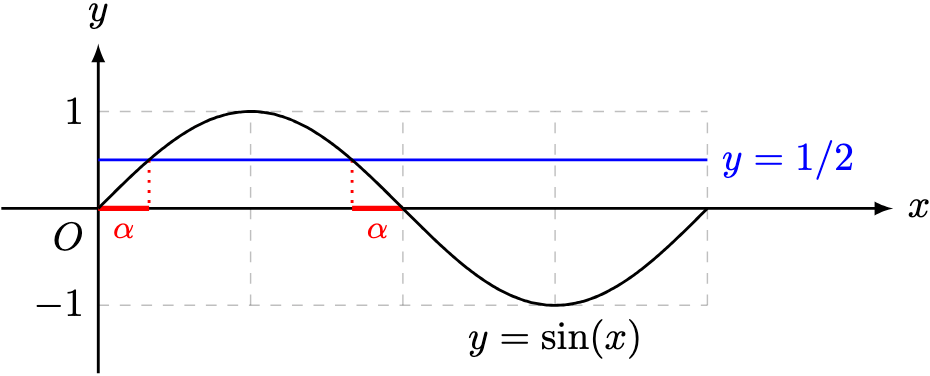
Finally, for general 

By repeating this process, given any integer 

In particular,

Furthermore, for any 


Therefore, we must have 

Problem 2. Solve the equation 
(Click for Solution)
Solution. Using special angles, we recall that for

Using the extended definitions of 

Since only the first and last equations work, we have 

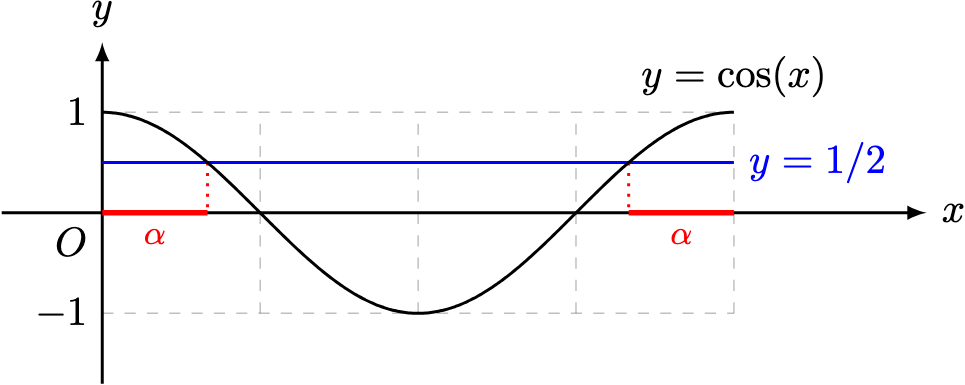
Graphically, we have the following.
Problem 3. Solve the equation 
(Click for Solution)
Solution. Using special angles, we recall that for

Using the extended definitions of 

Since only the first and third equations work, we have 

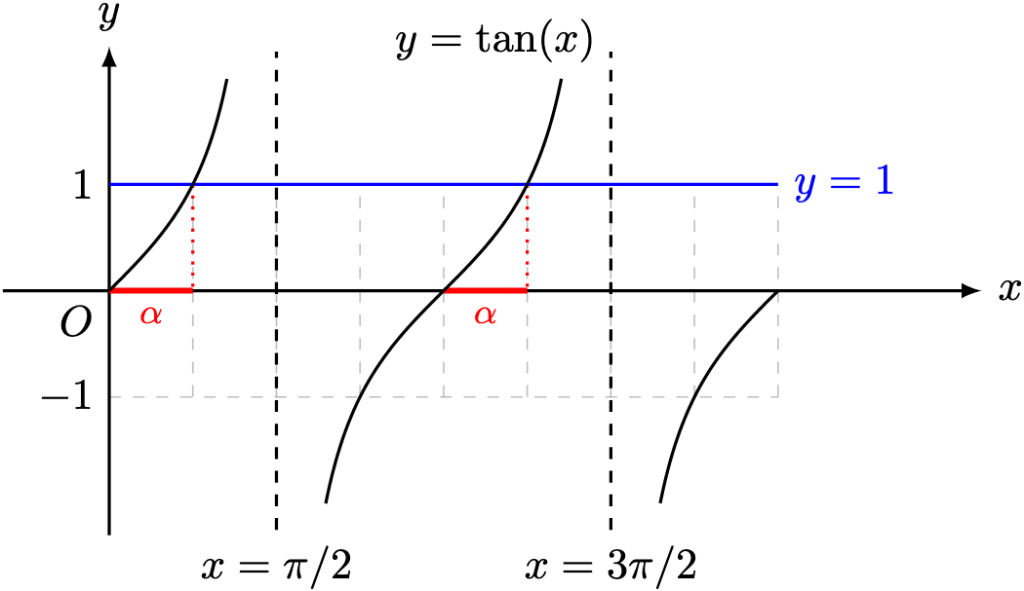
Graphically, we have the following.
Problem 4. For each of the cases 


(Click for Solution)
Solution. Firstly, we work with the case 


Using the extended definitions of

Since only the first and third equations work, we have 

In fact, we get one and only one solution:
Secondly, we work with the case 

Using the extended definitions of

Now, all equations work, so that we have exactly three solutions: 
Finally, we work with the case 
, or
.
In fact, we get one and only one solution: 
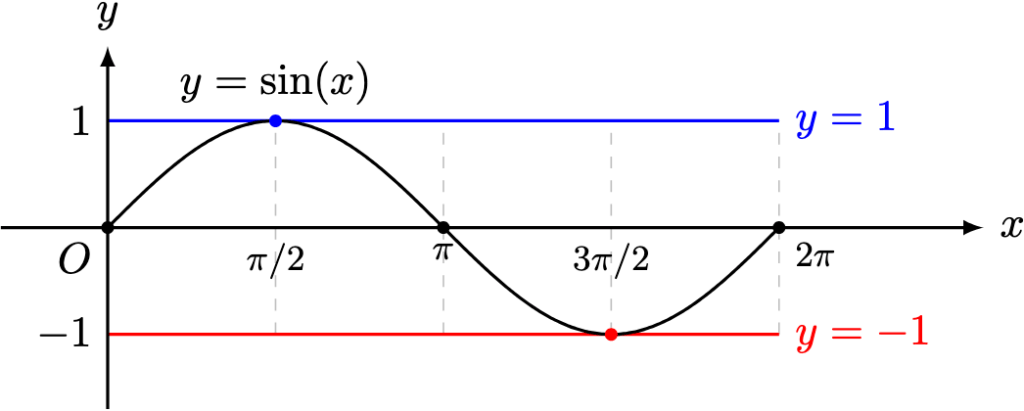
Notice that the 

Graphically, we have the following.
Problem 5. For each of the cases 
(Click for Solution)
Solution. We can either adopt the strategy in Problem 4, or simply focus on the special values

Therefore, for
,
,
.
Graphically, we have the following.
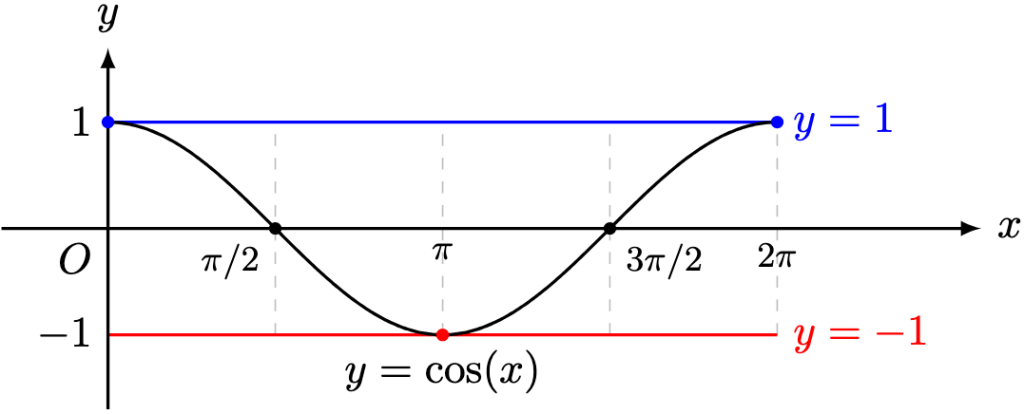
Problem 6. Fix 


Solve the equation 
(Click for Solution)
Solution. Using the extended definitions of

We consider the three cases:
- If
, then only the first two equations work:
.
- If
:
- If
, then only the last two equations work:
.
Graphically, we have the following.
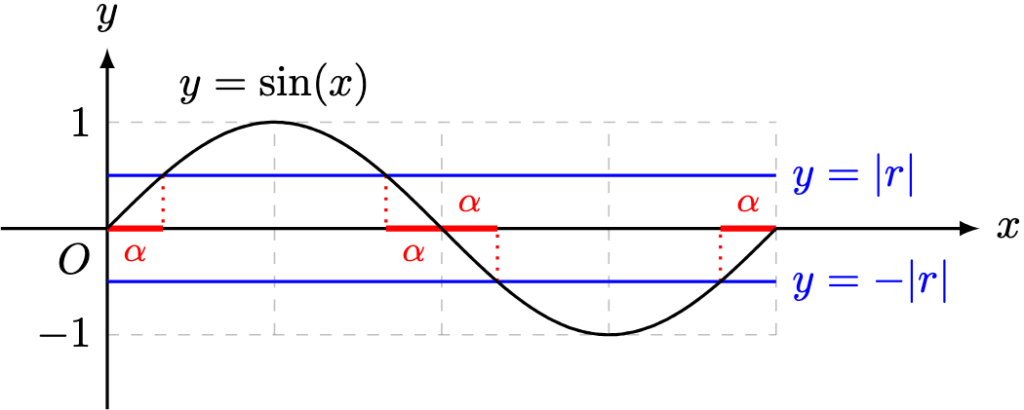
Problem 7. Fix

Solve the equation
(Click for Solution)
Solution. Using the extended definitions of

We consider the three cases:
- If
.
- If
by Problem 5.
- If
.
Graphically, we have the following.
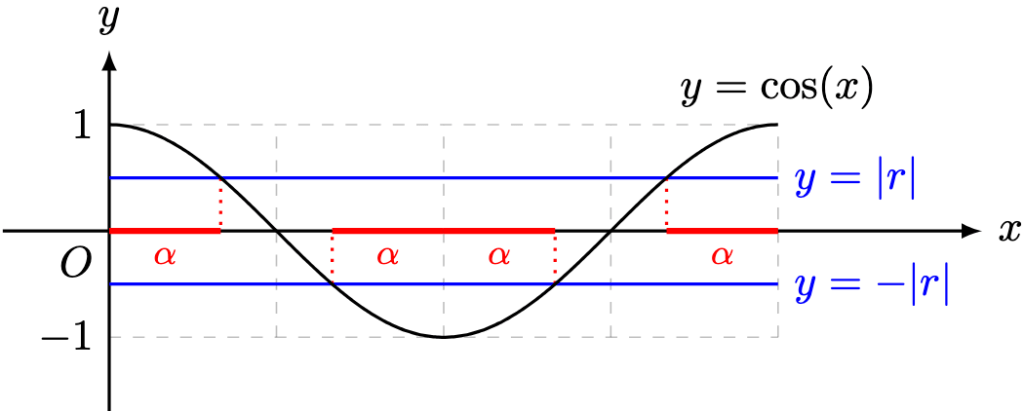
Problem 8. Fix any real number 

Solve the equation 
(Click for Solution)
Solution. Using the extended definitions of

We consider the three cases:
- If
.
- If
.
- If
Graphically, we have the following.
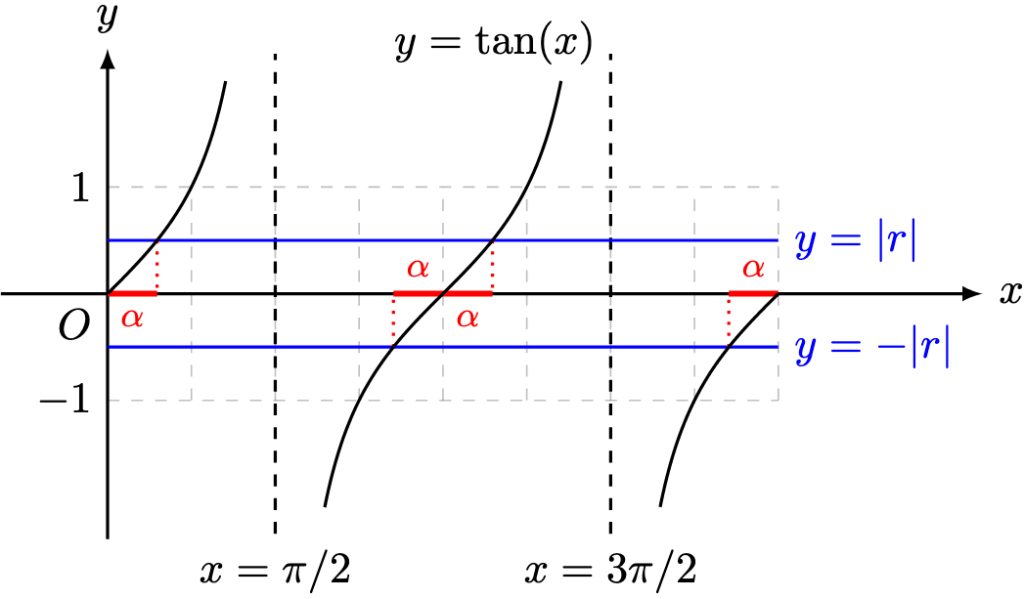
Remark 1. Problems 6–8 detail the ASTC strategy used to solve trigonometric equations. Given a trigonometric equation 
- the type of trigonometric function
, and
- the sign of
Example 1. Given the equation 

If 

If

Graphically, we have the following.
We then add and subtract enough angles by multiples of
Example 2. Given the equation 
If

If

We then add and subtract enough angles by multiples of
Graphically, we have the following.
Example 3. Given the equation 
If

If

Graphically, we have the following.
We then add and subtract enough angles by multiples of
Problem 9. Solve the equation 
(Click for Solution)
Solution. Write 


we appeal to Problem 1 (or ASTC techniques) to conclude that for 

To account for all solutions

Since 

Problem 10. Solve the equation 
Hint. Use the double-angle formula 
(Click for Solution)
Solution. Using the double-angle formula,

Hence, we can simplify the given equation in terms of 

Hence, 


However, since for any 

We appeal to Problem 9 (or ASTC techniques) to conclude that
—Joel Kindiak, 2 Feb 26, 2302H


Leave a Reply