Definition 1. The bearing of A from B relative to a North, N, is the (possibly reflex) clockwise angle formed between NA and AB. If the angle is smaller than 100°, we still denote it using 3 digits, as exemplified below.
A coastguard station on a 300-metre cliff at O monitors two vessels: Ship A and Ship B. Ship A is located at a bearing of 040° from the North, and Ship B is located at a bearing of 115° from the North.
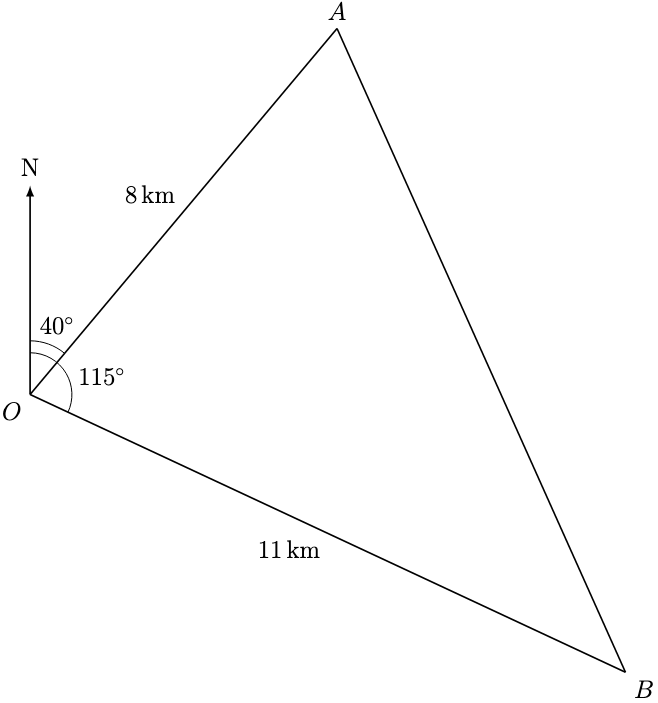
Problem 1. Calculate the distance between Ship A and Ship B. Hence, calculate the bearing of Ship B from Ship A.
(Click for Solution)
Solution. Firstly, 

By the law of sines,

Draw an extra north 

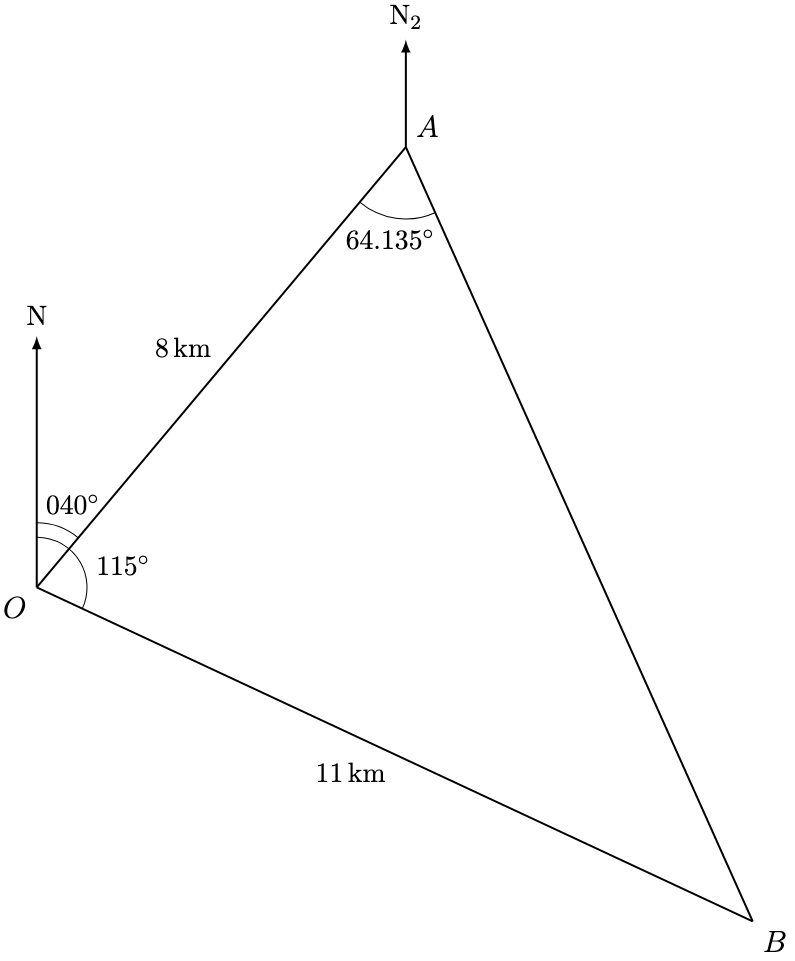
Using internal angles, since 

Since angles at a point sum to 

Definition 2. The angle of elevation of a point T from G is defined by 

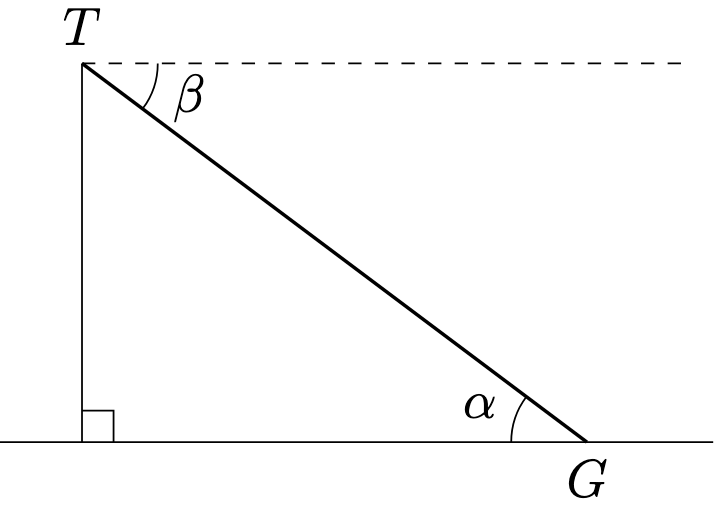
Problem 2. Determine the point P on AB that maximises the angle of depression of P from the top of the coastguard station.
(Click for Solution)
Solution. Let 

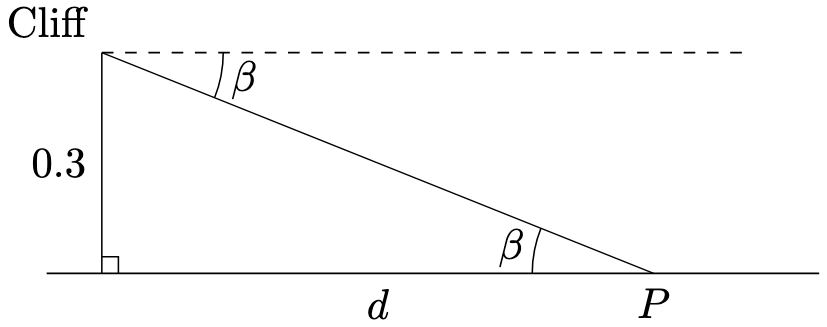
The angle of depression, using alternate angles, is given by

Since 
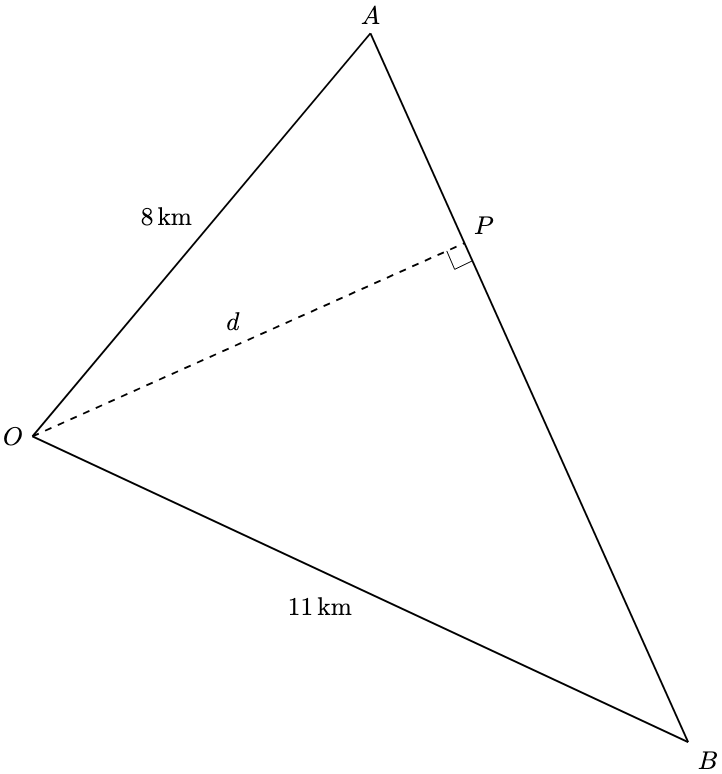
Therefore, using basic trigonometry,

Hence,

Therefore, 
Problem 3. A buoy is equidistant from A and B and equidistant between OB and OA. Estimate the distance of the buoy from O.
(Click for Solution)
Solution. We draw the perpendicular bisector of 
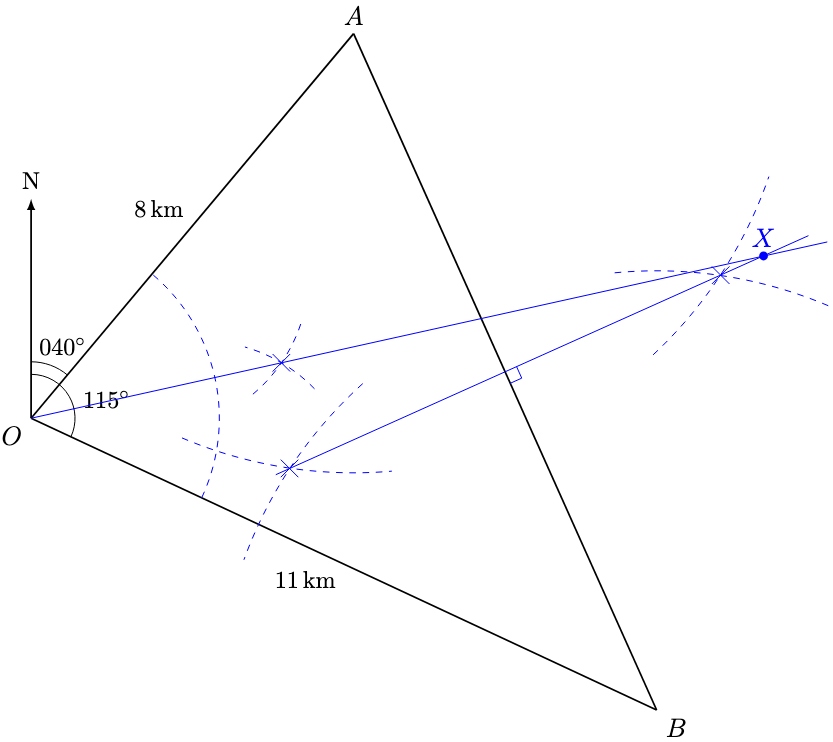
Letting 
—Joel Kindiak, 8 Apr 26, 2110H
 KindiakMath
Leave a comment