Problem 1. The diagram below shows a quadrilateral ABCD with the midpoints P, Q, R, S of AB, BC, CD, DA respectively.
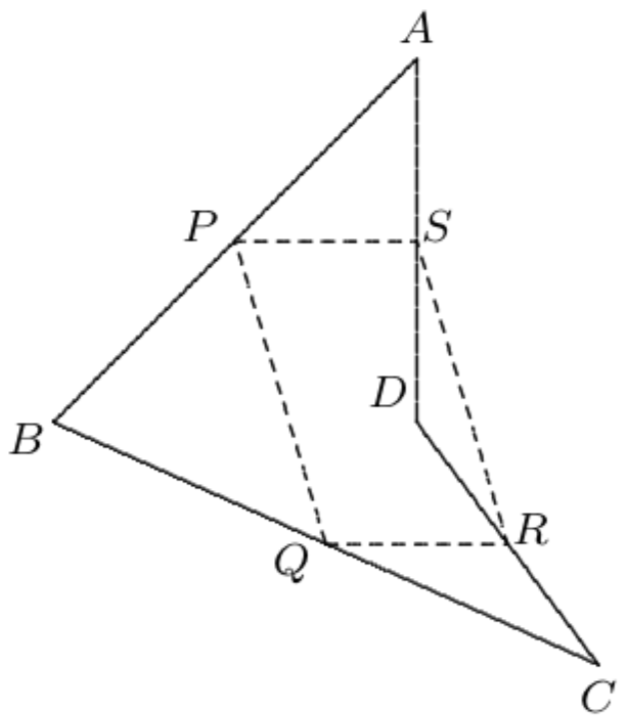
Show that PQRS forms a parallelogram.
(Click for Solution)
Solution. It suffices to show that PQ || RS and QR || SP. Since P is the midpoint of AB = BA and Q is the midpoint of BC, we have PQ || AC by the midpoint theorem. Since R is the midpoint of CD = DC and S is the midpoint of DA, we have RS || CA = AC by the midpoint theorem. Therefore, PQ || RS, as required.
Similarly, since Q is the midpoint of BC = CB and R is the midpoint of CD, we have QR || BD by the midpoint theorem. Since S is the midpoint of DA = AD and P is the midpoint of AB, we have SP || DB = BD by the midpoint theorem. Therefore, QR || SP, as required.
Alternate Solution. By the midpoint theorem,

Therefore,

Similarly,

Therefore,

implies that PQ || RS and QR || SP, as required.
Problem 2. The diagram below shows a triangle ABC with midpoint D of BC.
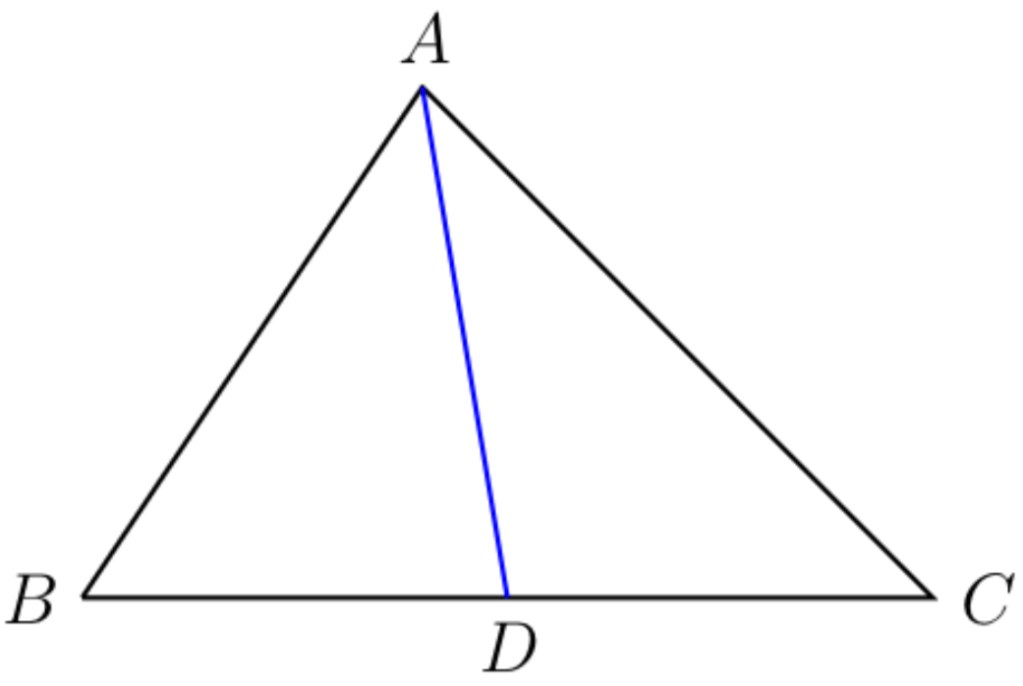
Show that AB2 + AC2 = 2 · AD2 + 2 · BD2. This result is called Apollonius’ theorem.
(Click for Solution)
Solution. By the law of cosines,

Since 


Summing the equations,

Problem 3. The diagram below shows a triangle ABC with midpoints A’, B’, C’ of BC, CA, AB respectively.
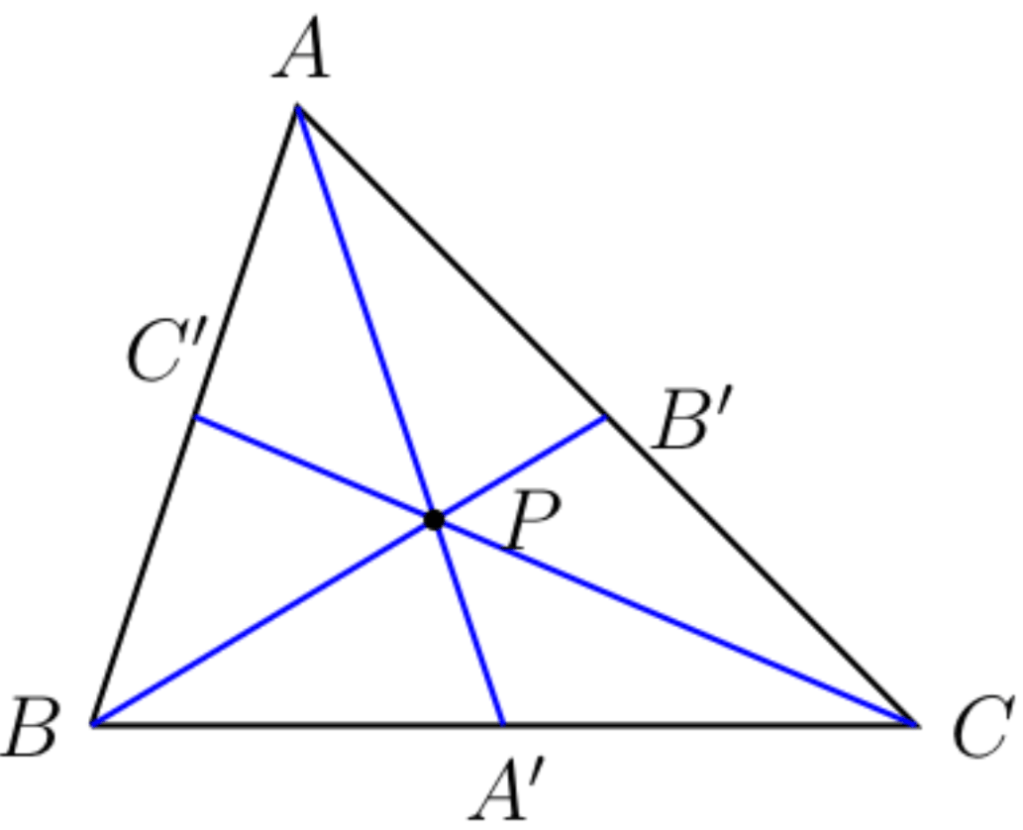
Show that 
(Click for Solution)
Solution. Let 


Therefore, 

Since areas are additive,

Since 


—Joel Kindiak, 31 Mar 26, 2359H
 KindiakMath
Leave a comment